
The Mousetrap: Origins – Screen To Stage
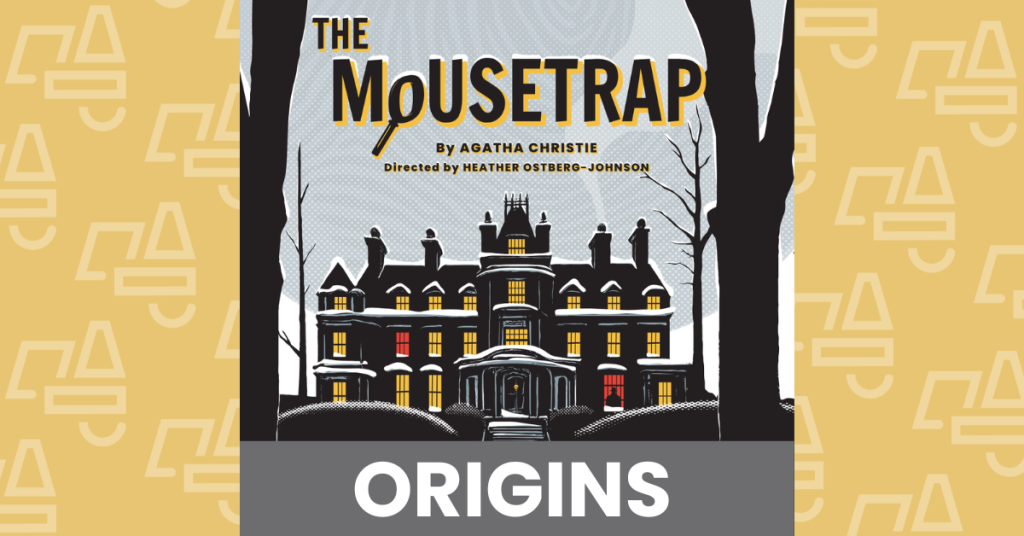
The Mousetrap by Agatha Christie – Origins
The Origins of The Mousetrap
Agatha Christie, often hailed as the “Queen of Mystery,” remains the best-selling novelist of all time. With 66 detective novels, over 150 short stories, and a vast collection of plays, her influence on the mystery genre is immeasurable. Among her most iconic works is The Mousetrap, a play that has not only captivated generations of theatergoers but has also earned a remarkable place in theatrical history. First staged in 1952, the production has become the world’s longest-running play, cementing Christie’s legacy in both literature and live performance.
The Plot of The Mousetrap
Set in the newly opened Monkswell Manor Guest House during a fierce snowstorm, The Mousetrap follows a group of strangers trapped together as they learn a murderer may be among them. When the police announce that one of the guests is connected to a past crime, tensions rise and suspicion spreads. Each character harbors secrets and motives, and as the plot twists unfold, audiences are swept into a classic Christie puzzle full of red herrings, unexpected confessions, and a final reveal that has surprised audiences for more than seven decades.
The famous request at the end of the show, asking audiences not to give away the ending, has helped preserve the mystery for generations of theatergoers.
From Radio Play to Stage Phenomenon
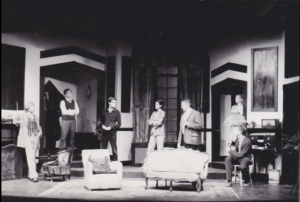
Interestingly, The Mousetrap didn’t begin as a stage play at all. Its earliest version was a short radio drama titled Three Blind Mice, written as a birthday gift for Queen Mary in 1947. The broadcast was so well-received that Christie adapted it into a short story. However, she later withdrew the story from publication to protect its stage potential, feeling the plot was better suited for live performance.
Christie then expanded Three Blind Mice into a full-length play, retitling it The Mousetrap, which was a nod to the play-within-a-play from Shakespeare’s Hamlet, where a theatrical performance exposes a killer. The title proved fitting for a story built around traps, secrets, and ensnared identities.
West End Production and Cast Highlights
The Mousetrap premiered on October 6, 1952, at the Theatre Royal, Nottingham, before transferring to London’s West End. The original production starred Richard Attenborough as Detective Sergeant Trotter and Sheila Sim as Mollie Ralston. Attenborough, who would later become a celebrated filmmaker known for works such as Gandhi, became a lifelong champion of the play’s legacy.
Christie signed over the rights to Attenborough and Sim as a gesture of goodwill, believing the play would have “a respectable run of eight months or so.” No one, including Christie herself, could have predicted its extraordinary longevity.
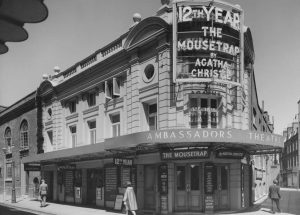
The play moved to the Ambassadors Theatre in London, where it ran continuously for 22,000 performances over 62 years before transferring to the larger St. Martin’s Theatre in 1974. To this day, the production records its cast changes with near-ceremonial precision, maintaining traditions that have become part of its charm.
Reception, Records, and Enduring Success
Upon opening, The Mousetrap received warm but modest reviews. Critics praised Christie’s craftsmanship, though few foresaw the cultural phenomenon it would become. As the decades went on, the play’s reputation grew, drawing millions of visitors from around the world. In 1958, it surpassed Blithe Spirit as the longest-running West End play, and by 1974, it held the record for the longest-running show of any kind.
The production’s uninterrupted run, which paused only briefly in 2020 due to the COVID-19 pandemic, has given it an almost mythic status in British theatre. Today, the play is considered a must-see for tourists, mystery lovers, and theatre enthusiasts.
Christie herself once remarked that she didn’t understand the secret to its success, but audiences continue to be drawn to its combination of suspense, wit, and classic detective storytelling.
Adapting the Story
While the play remains the definitive version of The Mousetrap, the story has seen several adaptations and near-adaptations. The original radio version is preserved in some archives, and Christie’s short story Three Blind Mice occasionally appears in special editions or anthologies.
However, film adaptations have been a long-standing point of interest and complication. Christie anticipated that a movie might one day be made, but her contracts included strict stipulations: a film could not be produced until the West End production had closed. Given that the play has now run for more than 70 years, this clause has effectively kept any major screen version from being made.
Various stage tours, international productions, and special anniversary performances (including one with Patrick Stewart and Ian McKellen) have kept the story alive beyond London, each iteration adding a fresh interpretation to the characters and atmosphere.
A Legacy That Continues
From a short radio sketch to the longest-running play in history, The Mousetrap exemplifies Agatha Christie’s enduring ability to craft mysteries that captivate and surprise. Its legacy is more than its record-breaking run. It lies in the ritual of the shared secret, the thrill of the unknown, and the timeless appeal of a well-told whodunit.
Seven decades after its premiere, The Mousetrap remains an essential piece of theatrical history and a testament to Christie’s unmatched storytelling, proving that a masterfully constructed mystery never loses its power to intrigue.
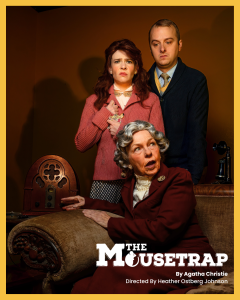
The Mousetrap
By Agatha Christie
Directed by Heather Ostberg Johnson
January 9th, 2026 – February 7th, 2026
A spine-chilling crime, seven strangers, and nowhere to run. Trapped by a relentless blizzard at Monkswell Manor, seven stranded guests soon discover that murder is afoot — and no one is above suspicion. With every revelation, the tension mounts, alibis begin to fray, and the killer tightens their grip. A perfect storm of intrigue, secrets, and suspense, Agatha Christie’s legendary whodunit has kept audiences guessing for over 70 years.
Content/Atmosphere Warning: Contains adult themes. For specific questions on content, please contact info@openstage.com